By Salman Siddiqui
🌐 State of AI in 2025: Public product offerings and who’s leading
AI has moved from buzz to backbone. Most organizations now use AI in some capacity—especially agents and copilots—yet many are still early in scaling and realizing enterprise-level impact, pushing vendors to differentiate with usability, reliability, and clear ROI rather than flashy demos. Monetization has matured into a mix of freemium access, subscriptions, and enterprise tiers, reflecting AI’s unique compute and distribution economics.
🌍 Leadership status among publicly accessible AI products
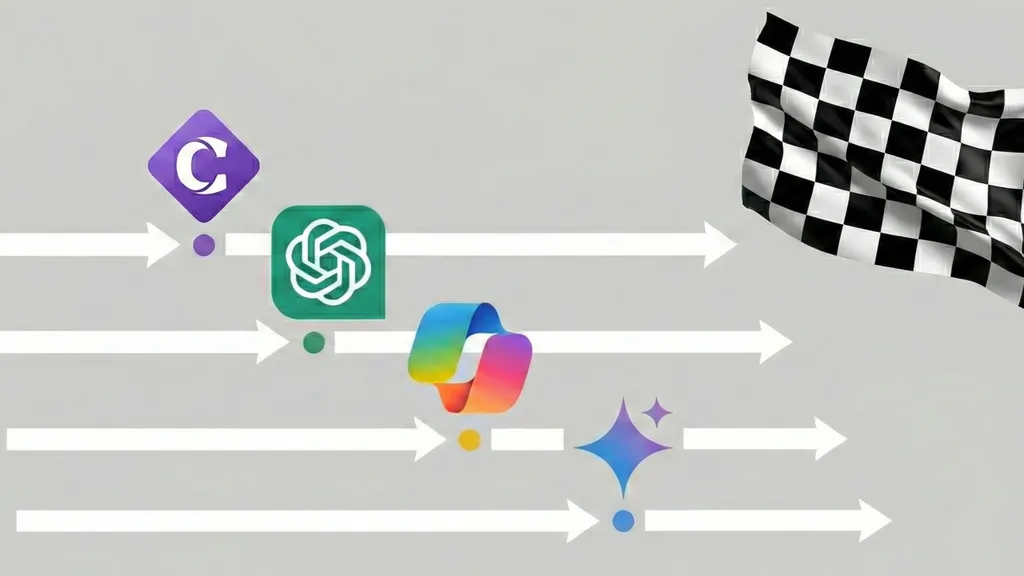
- Foundation model chatbots dominate mindshare. ChatGPT, Claude, Gemini, and Microsoft Copilot lead general-purpose use due to breadth of capabilities, developer ecosystems, and deep integrations into productivity suites and the web.
- “Copilot-style” assistants are winning enterprise adoption. Microsoft Copilot’s tight integration with Office and Windows makes it a default choice in many workplaces, while Google’s Gemini powers Workspace and Android experiences; Claude is praised for reliability and long-context reasoning in professional workflows.
- Specialized creators remain strong. Midjourney, Stable Diffusion, and Leonardo AI anchor visual creation; Synthesia and Runway lead video; Perplexity and Arc Search push retrieval-centric experiences; Notion AI and other embedded assistants thrive by enhancing existing apps.
- Agents and automation are the next chapter. Curiosity and early deployment of AI agents are high, but robust scaling remains limited—opening room for products that combine reasoning, tools, and process orchestration with verifiable outputs.
🏧 What’s free to use today (and what you get)
- Chatbots (free tiers): ChatGPT and Gemini offer free access with rate limits and smaller model variants; Claude’s free tier is available but subscription unlocks its strongest models and context windows.
- Search and retrieval: Perplexity’s free tier provides fast, source-cited answers; paid tiers add deeper models and pro features.
- Images: Stable Diffusion via community UIs remains free and open, while Midjourney and Leonardo are primarily subscription-based for higher-quality generation and commercial features.
- Productivity: Microsoft Copilot and Notion AI largely require subscriptions for sustained usage and enterprise-grade features, reflecting the shift toward embedded AI in daily work.
📊 Trends shaping the next 12 months
- From chat to agents: Organizations are piloting agents that perform multi-step tasks with tools and guardrails, but scaling and reliable outcomes are the hurdle to cross for mainstream adoption.
- Hybrid monetization: Freemium continues, but subscriptions and enterprise contracts dominate for higher model tiers, uptime, compliance, and integrations—especially in productivity and creative suites.
- Quality over novelty: Review-driven rankings favor consistent reasoning, trustworthy retrieval, and integrated workflows over one-off features—rewarding products that make daily work measurably smoother.
❣ How to choose for your workflow
- For deep analysis and writing: Start with Claude; add ChatGPT for breadth and learning, and Gemini for multimodal tasks tied to Google’s ecosystem.
- For work documents and meetings: Microsoft Copilot is strongest in Office/Windows contexts; Notion AI is best if your team already lives in Notion.
- For research: Use Perplexity when you need citations and current web context; pair with a chatbot for synthesis and formatting.
- For visuals: Midjourney for artistic quality; Stable Diffusion if you need open customization; Leonardo for production-friendly image workflows.